Sharks of the Bali Strait: How Temperature Shapes Their Numbers and Sizes

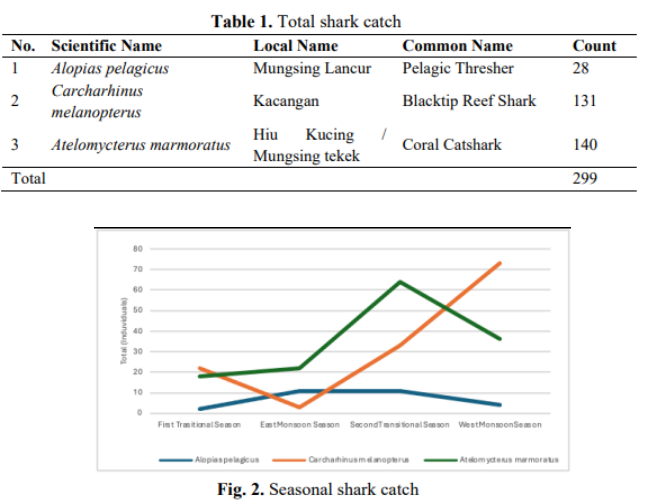
Original Title: Length Distribution and Abundance of Sharks and Relationship with Temperature in the Bali Strait Waters SDGs Connection: Secondary SDGs: SDG 13 – Climate Action; SDG 12 – Responsible Consumption and Production Short Narrative Explanation: This study explores the size distribution, abundance, and environmental drivers of shark bycatch in the Bali Strait, Indonesia, a […]
Biosecurity in Aquaculture: Strengthening Health and Sustainability

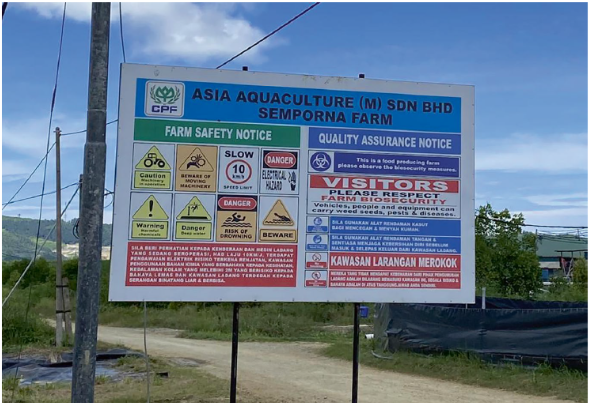
Researchers from Universitas Padjadjaran, together with international collaborators, have contributed to the book chapter “Biosecurity in Aquaculture: Nurturing Health and Ensuring Sustainability” (Springer Nature, 2024). The chapter highlights how biosecurity practices—from quarantine protocols to advanced diagnostic tools—are essential to safeguarding aquatic animal health, ensuring environmental stewardship, and supporting global food security. This research also underscores […]

Tracking the Invasion: How an Alien Freshwater Mussel Thrives Across Elevations in Tropical Indonesia

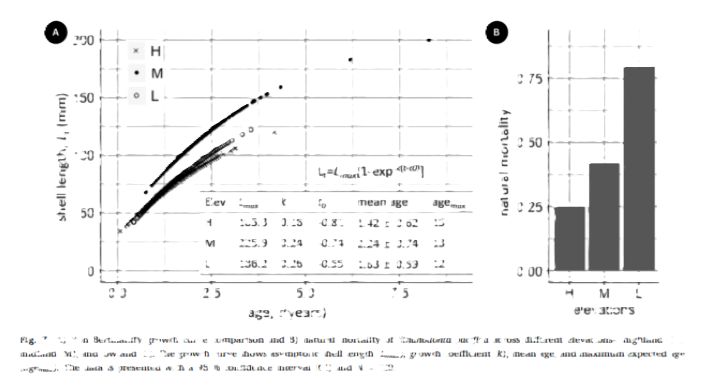
Original Title: Vertical distribution, growth pattern, and age of an alien freshwater mussel, Sinanodonta pacifica, across elevations gradient on a tropical island and their implication for ecosystem management SDGs Connection: Secondary SDGs: SDG 14 – Life Below Water, SDG 13 – Climate Action Short Narrative Explanation: This study examines the spread and population dynamics of […]

Tracking Seasonal Migration of Eastern Little Tuna in the Makassar Strait

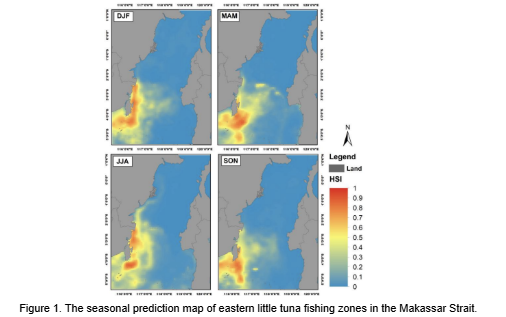
A new study published in AACL Bioflux (2025) provides important insights into the seasonal migration patterns of eastern little tuna (Euthynnus affinis) in the Makassar Strait. Using satellite-derived oceanographic data (sea surface temperature, sea surface height, chlorophyll-a) combined with catch records from 2019–2020, researchers applied the MaxEnt model to predict tuna habitat suitability with high […]

Cadmium-Reducing Bacteria Discovered in Indramayu’s Coastal Sediment

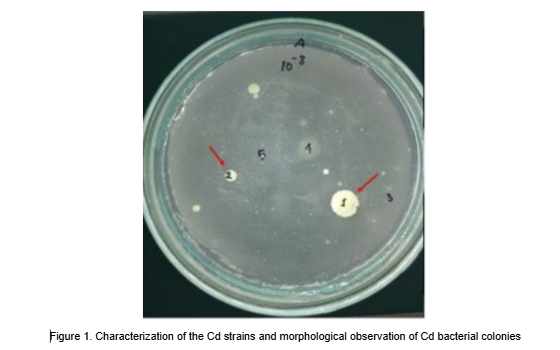
A team of researchers from Universitas Padjadjaran and international collaborators has successfully isolated and identified cadmium-reducing bacteria from contaminated coastal sediment in Karangsong Port, Indramayu. Two promising isolates—Karangsong Cd3 and Cd7—were identified as Pseudoalteromonas issachenkonii and Pseudoalteromonas tetraodonis, capable of reducing cadmium concentrations in seawater by up to 50% within 6 hours. These bacteria demonstrated […]

FPIK Unpad Research Unveils Microbial and Amino Acid Shifts in Fermented Shrimp Paste from Cirebon

A recent study led by Rusky Intan Pratama, lecturer at the Faculty of Fisheries and Marine Sciences, Universitas Padjadjaran (FPIK Unpad), explores the intricate microbial and biochemical transformations that occur in traditional shrimp paste (terasi) production in Cirebon, West Java. The research examined microbial community changes and amino acid profiles in pre- and post-fermentation shrimp […]

Genes, Hormones, and Resilience: Advancing Sustainable Aquaculture Through Transgenic Catfish Research

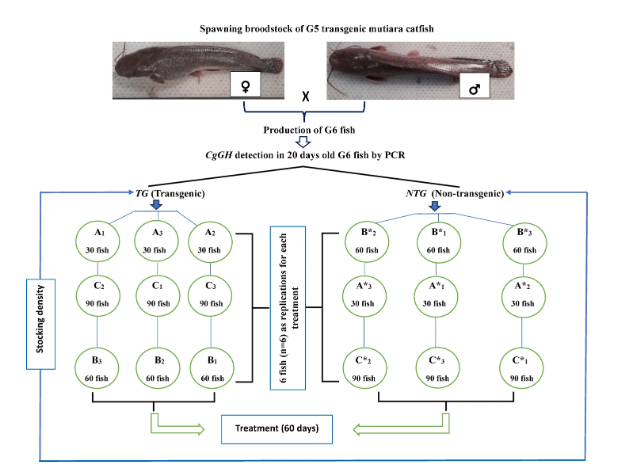
A research study led by Dr. Yuniar Mulyani sheds light on the complex relationship between stocking density, stress, and immune response in G6 transgenic mutiara catfish (Clarias gariepinus). Using gene expression analysis and hormone profiling, the research compared transgenic and non-transgenic catfish under varying stocking densities, revealing significant differences in stress tolerance and immune resilience. […]

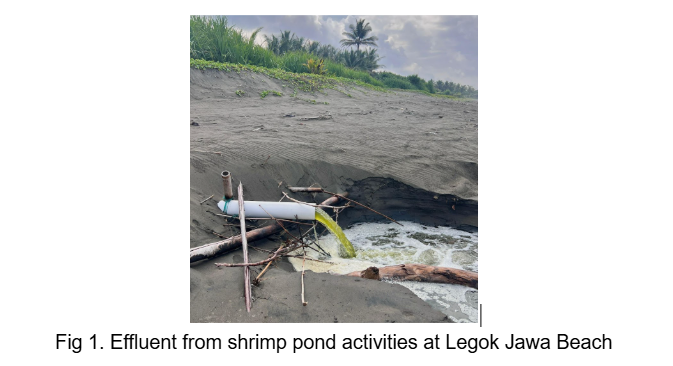
Shrimp Farming Waste Threatens Sea Turtle Nesting Grounds in Pangandaran Coastal – Core Conservation Zone

A recent study led by Professor Titin Herawati highlights the impact of vannamei shrimp (Litopenaeus vannamei) farming waste on the core zone ecosystems of Pangandaran Coastal Park, Indonesia. As a major hub for shrimp aquaculture, Pangandaran simultaneously serves as a critical conservation area for endangered sea turtles, yet its ecological balance is increasingly at risk […]

Tracking Ocean Energy in the Banda Sea

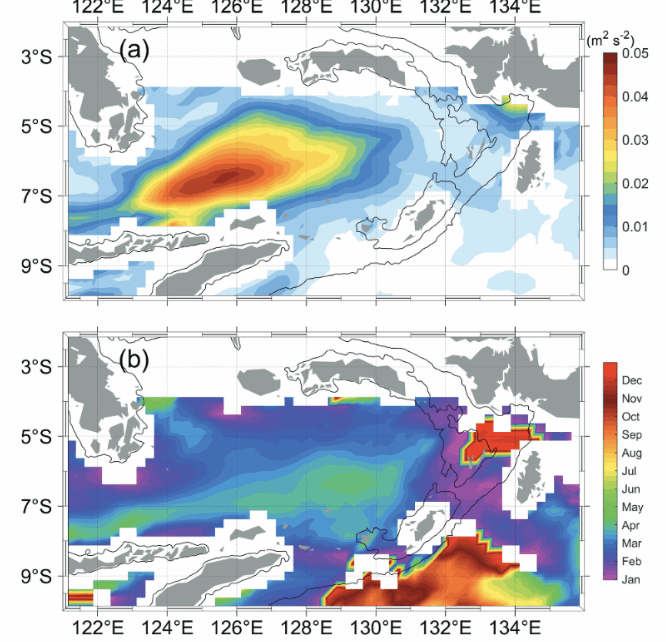
A new study published in All Earth (2025) reveals how ocean eddies—giant rotating currents—shape the Banda Sea’s circulation and energy balance. Using nearly three decades of satellite altimeter data (1993–2022), the research found that eddy kinetic energy (EKE) peaks between March and April, strongly influenced by the Southern Boundary Current (SBC). When the SBC intensifies, […]

Demographic dimension of ocean perceptions: Evidence from Indonesia

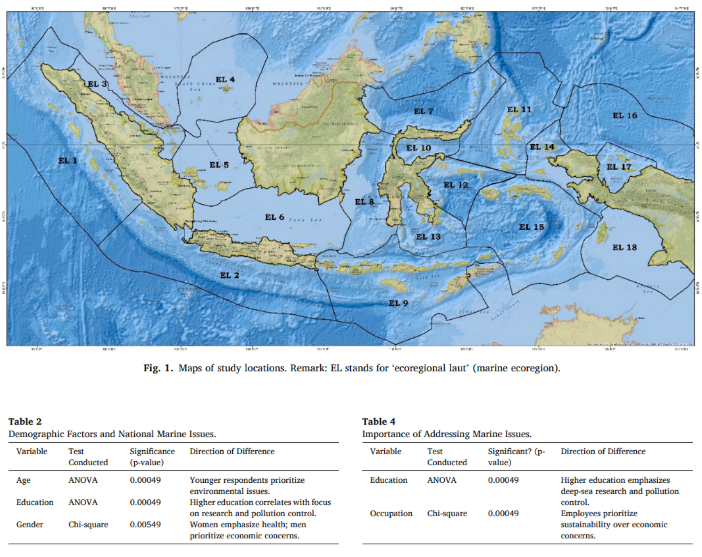
This study investigates how demographic factors—including age, gender, education, occupation, and length of residence—affect how Indonesians perceive and engage with marine conservation. The research gathered responses from 3,159 individuals across 18 marine ecoregions, using both surveys and interviews to capture national-level insights.The findings reveal significant demographic differences in attitudes toward the ocean. Younger and more […]

Harnessing Google Earth Engine to Protect Small Islands

Researchers from Universitas Padjadjaran contributed to Chapter 19 – “Climate Change Challenges: The Vital Role of Google Earth Engine for Sustainability of Small Islands in the Archipelagic Countries” (Elsevier, 2025). This chapter highlights how small islands in archipelagic nations serve as critical guardians of ecosystems such as coral reefs, mangroves, and seagrass beds, which in […]

Integrating Morphological and Genetic Tools: FPIK Unpad Researchers Clarify Threadfin Bream Identity in Jakarta’s Muara Baru Fish Market

A recent study conducted by Ismail Maqbul and Mochamad Untung Kurnia Agung, lecturers from the Faculty of Fisheries and Marine Sciences, Universitas Padjadjaran (FPIK Unpad), has successfully identified the species Nemipterus furcosus collected from Muara Baru modern fish market in Jakarta using a combined morphological and genetic approach. The research underscores the importance of integrating […]