


Original Title:
Vertical distribution, growth pattern, and age of an alien freshwater mussel, Sinanodonta pacifica, across elevations gradient on a tropical island and their implication for ecosystem management
SDGs Connection:
- Primary SDG: SDG 15 – Life on Land
Secondary SDGs: SDG 14 – Life Below Water, SDG 13 – Climate Action
Short Narrative Explanation:
This study examines the spread and population dynamics of the alien freshwater mussel Sinanodonta pacifica across lowland, midland, and highland areas in West Java, Indonesia. Originally introduced to Indonesia in the late 1960s, this species has become a successful invader due to its broad environmental tolerance and ability to reproduce throughout the year.
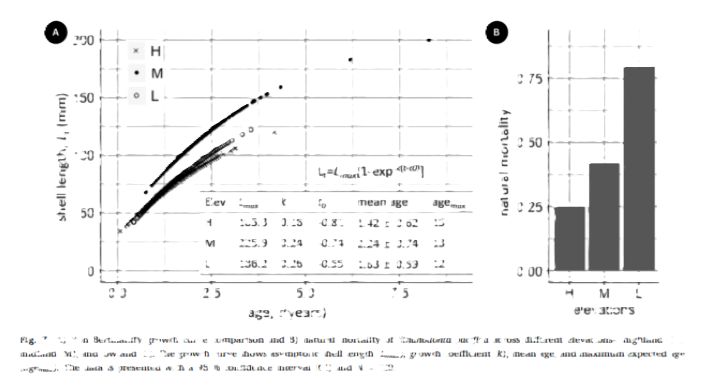
Researchers collected and analyzed 1,200 mussels from 2020–2021, measuring their density, growth, age, and mortality. Results showed that midland areas (300–750 m) provided the most favorable conditions, with the highest population density, fastest growth, and optimal recruitment, thanks to moderate temperatures, lower suspended solids, and higher nutrient availability. Lowland regions experienced the highest mortality due to pollution and high suspended solids, while highland populations exhibited the longest lifespan (up to 15 years) but with slower growth rates.
The findings demonstrate that S. pacifica is highly adaptable, capable of thriving across a wide elevation range, but especially prone to rapid expansion in midland areas. This poses serious threats to native biodiversity, as the species can outcompete local mussels for food and habitat. The study emphasizes the urgent need for targeted conservation strategies, including periodic harvesting and continuous monitoring, to prevent further spread and protect freshwater ecosystems.
By providing baseline ecological data and highlighting critical environmental factors—temperature, total suspended solids, and organic matter—this research offers valuable guidance for ecosystem management and invasive species control in tropical freshwater systems.
Credits:
This research was led by Asep Sahidin (Universitas Padjadjaran, Indonesia) in collaboration with Gunawan Muhammad (BRIN & Indonesian Malacological Society), Yusli Wardiatno (IPB University), and Akira Komaru (Mie University, Japan), with additional contributions from colleagues across Indonesian and Japanese institutions.
Hashtags:
#InvasiveSpecies #FreshwaterConservation #SDG15 #EcosystemManagement #Mussels #Biodiversity
Publication Link:
https://www.sciencedirect.com/science/article/pii/S2351989425002550?via%3Dihub