
Original Title:
Length Distribution and Abundance of Sharks and Relationship with Temperature in the Bali Strait Waters
SDGs Connection:
- Primary SDG: SDG 14 – Life Below Water
Secondary SDGs: SDG 13 – Climate Action; SDG 12 – Responsible Consumption and Production
Short Narrative Explanation:
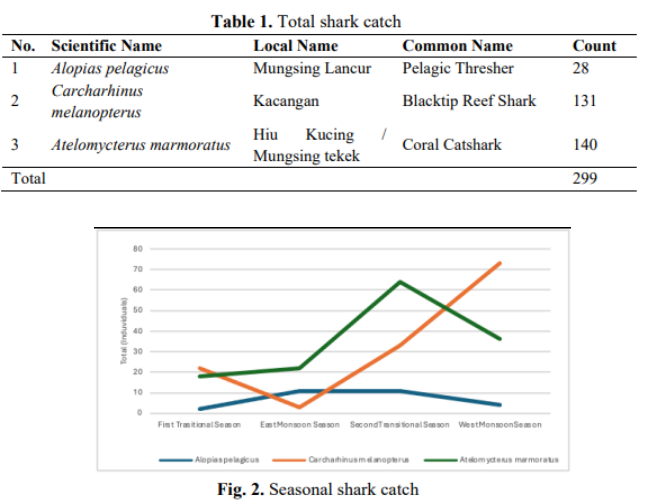
This study explores the size distribution, abundance, and environmental drivers of shark bycatch in the Bali Strait, Indonesia, a region where sharks remain economically important yet ecologically vulnerable. Researchers focused on three key species landed at Brak Muncar Fish Landing Port between March 2023 and February 2024: the pelagic thresher (Alopias pelagicus), blacktip reef shark (Carcharhinus melanopterus), and coral catshark (Atelomycterus marmoratus).
A total of 299 sharks were recorded, with A. marmoratus (140 individuals) and C. melanopterus (131 individuals) dominating the catches. Alarmingly, most individuals were juveniles—a sign of potential overexploitation. Size data showed C. melanopterus (45–56.6 cm) and A. pelagicus (137.8–172.7 cm) were frequently caught before reaching reproductive maturity, raising concerns about population sustainability. Sex ratio analysis revealed balanced proportions across species, although A. marmoratus showed a slight female bias.
Sea surface temperature (SST), ranging between 27.3–30.4°C, emerged as a significant factor influencing shark catches. Statistical analysis showed a strong correlation for C. melanopterus (R = 0.650), a moderate correlation for A. pelagicus (R = 0.496), and negligible influence for A. marmoratus (R = 0.085), reflecting the species’ site fidelity to coral reef habitats. Seasonal shifts also played a role, with catches peaking during breeding and upwelling periods when prey availability increased.
The study emphasizes urgent management interventions, including stricter bycatch regulations, temporary no-catch zones in breeding areas, and better alignment with IUCN and CITES conservation listings. Training fishers in selective techniques and developing community-based monitoring systems are also recommended to safeguard shark populations. By linking ecological data with fisheries management, the research contributes valuable insights toward sustainable shark conservation in Indonesia’s waters.
Credits:
This study was conducted by Michelle Levina, Sunarto, Wahyuniar Pamungkas, Mochamad Rudyansyah Ismail (Universitas Padjadjaran), and Muhammad Ghozaly Salim (Mobula Project Indonesia).
Hashtags:
#SharkConservation #SDG14 #MarineResearch #BaliStrait #BycatchReduction #SustainableFisheries