
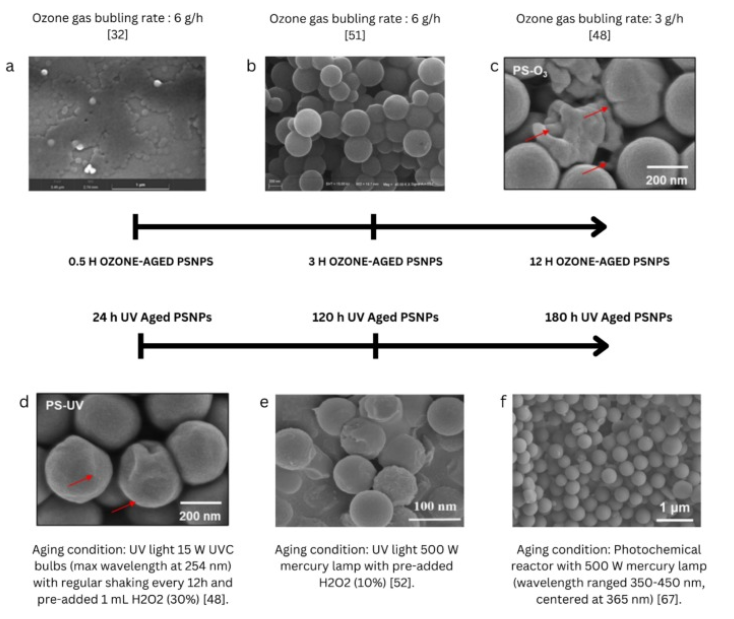


Nanoplastics—tiny plastic particles smaller than 1 µm—are increasingly recognized as an invisible but serious threat to aquatic ecosystems. While much research has focused on their presence and immediate toxicity, this study emphasizes a critical but underexplored dimension: how nanoplastics “age” once they enter the environment, and how this aging alters their behavior, interactions, and risks.
The authors review how natural processes such as UV radiation, oxidation, mechanical abrasion, and microbial colonization change the physical and chemical properties of nanoplastics over time. These transformations affect particle size, surface charge, hydrophobicity, and the ability to adsorb pollutants or biomolecules. Importantly, aged nanoplastics often display greater reactivity and toxicity compared to their “fresh” counterparts.
Experimental findings show that aging enhances the tendency of nanoplastics to bind with heavy metals, organic pollutants, and even pathogens, amplifying their ecological risks. In aquatic organisms, aged particles more readily penetrate cell membranes, disrupt metabolic processes, and cause oxidative stress. Their altered surface chemistry also makes them more persistent in food webs, raising concerns about long-term bioaccumulation and human health impacts through seafood consumption.
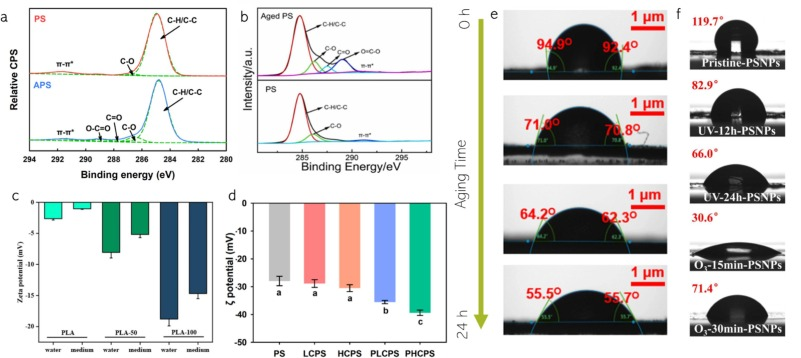
The paper stresses the knowledge gap between laboratory studies (often using pristine nanoplastics) and real-world conditions where particles are continuously weathered. By overlooking aging, risk assessments may underestimate the true ecological and health hazards of nanoplastics.
The authors propose a more comprehensive research agenda, integrating environmental simulation studies, advanced spectroscopy, and ecotoxicology. They also highlight the importance of incorporating nanoplastic aging into policy frameworks, waste management strategies, and plastic reduction initiatives.
Ultimately, the study underscores that addressing nanoplastic pollution is not only a scientific challenge but also a governance issue requiring urgent global attention. Without considering aging effects, efforts to protect aquatic biodiversity and human health will remain incomplete.
Credits
Meet the Researchers: This study was conducted by a multidisciplinary team of environmental scientists and toxicologists specializing in microplastic and nanoplastic research, with affiliations to leading institutions in aquatic pollution and materials science.
Hashtags
#Nanoplastics #MarinePollution #SDG14 #PlasticWaste #ClimateAction #BluePlanet
Publication Link
https://www.sciencedirect.com/science/article/pii/S2590182625000165?via%3Dihub