
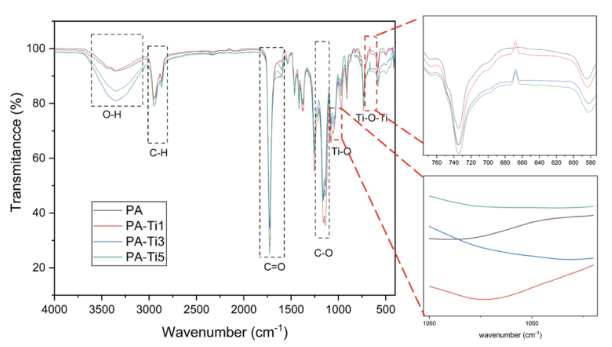


Industrial dye effluents are a persistent source of water pollution in many developing regions. This study presents a greener pathway to remove dyes—specifically methylene blue—by engineering a hybrid biocomposite made from alginate, polycaprolactone (PCL), and TiO₂. The materials were compounded and characterized using XRD, FT‑IR, tensile testing, DSC/TGA, and biodegradation assays, then evaluated for their photocatalytic performance under light exposure. The goal was to create a recyclable, effective, and low‑impact material that can be integrated into wastewater treatment lines.
Results show that incorporating TiO₂ into the alginate/PCL matrix enhances mechanical stability while enabling robust photocatalytic degradation of dye. The composite retained performance across repeated cycles, indicating practical reusability. Importantly, material choices and processing conditions were selected to minimize environmental footprint compared to conventional polymer composites. Beyond performance metrics, the team discusses manufacturability and cost considerations, suggesting routes to scale production for small and medium‑sized industries.
From a policy perspective, this research connects materials science directly to water‑quality outcomes. By pairing biodegradable polymers with a widely used photocatalyst, the biocomposite provides an option for decentralized treatment units—particularly in textile, food‑processing, and printing sectors where dye effluents are common. The approach supports cleaner production practices, helps facilities meet regulatory discharge limits, and reduces reliance on chemical coagulants that create secondary waste streams. The work also highlights the importance of multi‑institution collaboration to accelerate technology transfer—from laboratory prototypes to industrial pilots.
Overall, the study advances SDG 6 by providing a practical tool to improve wastewater quality, complements SDG 12 by enabling circular strategies (reuse and safer materials), and supports SDG 9 through applied innovation aligned with industry needs.
Read full paper here: https://doi.org/10.1016/j.sajce.2024.12.003
Credits
Universitas Padjadjaran authors: Emma Rochima
Collaborating authors and institutions: Bunga Fisikanta Bukit (BRIN; Universitas Quality Berastagi); Agus Wedi Pratama (ITS); Erna Frida (Universitas Sumatera Utara); Bakti Berlyanto Sedayu (BRIN); Dina Fransiska (BRIN); Deni Purnomo (BRIN); Istiqomah Rahmawati (Univ. Jember); Sona Suhartana (BRIN); Firda Aulya Syamani (BRIN)
Affiliations: Department of Fisheries Processing Technology, Faculty of Fisheries and Marine Sciences, Universitas Padjadjaran, Jatinangor, Indonesia; Research Collaboration Center for Marine Biomaterials, Jatinangor, Indonesia; National Research and Innovation Agency (BRIN), Indonesia; Institut Teknologi Sepuluh Nopember (ITS), Surabaya, Indonesia; Universitas Sumatera Utara, Medan, Indonesia; Universitas Quality Berastagi, North Sumatra, Indonesia; University of Jember, Indonesia
Hashtags: #UnpadResearch #SDG6 #CleanWater #Biocomposites #Photocatalysis #CircularEconomy