
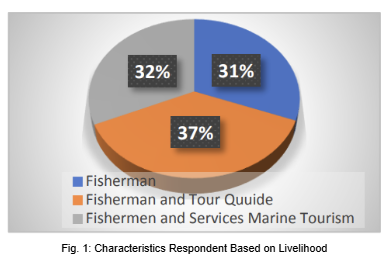
A new study published in WSEAS Transactions on Environment and Development (2025) explores how marine tourism can serve as a driver for sustainable empowerment of coastal communities in the southern region of West Java, Indonesia. Based on surveys and field data collected between April 2023 – June 2024, the research highlights that while marine tourism offers new economic opportunities beyond fisheries, it remains highly dependent on healthy ecosystems such as coral reefs, mangroves, and beaches, which are vulnerable to climate change and biodiversity loss.
The findings emphasize that marine tourism must be integrated with policies that prioritize sustainability, local cultural wisdom, and technological innovation. Strategies proposed include developing resilient funding for conservation, applying sustainability indicators, promoting ecotourism, and enhancing value chains that benefit local households. By involving communities, policymakers, and stakeholders, marine tourism can both restore natural environments and improve socio-economic resilience for fishing households transitioning into tourism-related livelihoods.
This research contributes to the achievement of United Nations Sustainable Development Goals (SDG 8 – Decent Work and Economic Growth, SDG 11 – Sustainable Cities and Communities, SDG 13 – Climate Action, SDG 14 – Life Below Water, and SDG 15 – Life on Land).
Full article: https://www.scopus.com/pages/publications/105007647865
Meet the Researchers
This study was conducted by Atikah Nurhayati and Wahyuniar Pamungkas (Faculty of Fisheries and Marine Science, Universitas Padjadjaran) and Ahmad Prawira Dhahiyat (Marine Tourism Vocational Program, Universitas Padjadjaran).
Hashtags
#MarineTourism #CoastalCommunities #SustainableTourism #BlueEconomy #ClimateAction #UnpadResearch #SDG8 #SDG11 #SDG13 #SDG14 #SDG15