
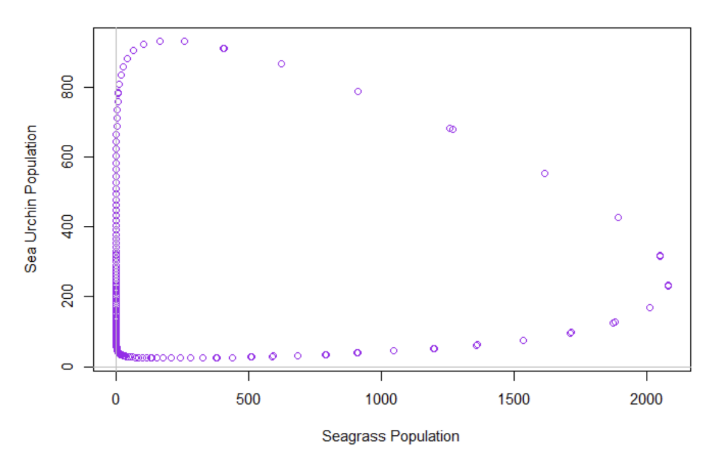


Sea urchins are vital herbivores in seagrass meadows, but when their numbers surge, grazing can flip a thriving bed into a barren state. This study uses predator–prey population models to map the thresholds where that shift occurs and to identify management levers that keep ecosystems stable. By varying growth, grazing, and mortality rates, the simulations reveal parameter ‘windows’ that maintain balance—and warn where small changes push the system past a tipping point.
The practical takeaway for coastal managers is twofold. First, monitor both urchins and seagrass, not just one or the other: stability depends on their interaction. Second, apply targeted measures—controlled harvests, protecting urchin predators, or reducing nutrient inputs that fuel algal competition—before thresholds are crossed. The paper also calls for more field data to refine local parameter values so that models translate into site‑specific action plans.
With seagrass meadows among the planet’s most efficient blue‑carbon sinks and nurseries for fisheries, preventing barren patches advances SDG 14 (healthy coasts) and SDG 13 (climate mitigation), and supports SDG 15 through habitat conservation. Turning theory into early‑warning guidance helps decision‑makers act in time to protect both biodiversity and livelihoods.
Read full paper here: https://www.scopus.com/record/display.uri?eid=2-s2.0-85215589357&origin=recordpage
Credits
Universitas Padjadjaran authors: Imam Cahyana; Wahyuniar Pamungkas; Subiyanto; Donny Prihadi; Sheila Zallesa.
Other institutions involved: —.
Hashtags: #UnpadResearch #SDG14 #Seagrass #SeaUrchin #EcosystemModeling