
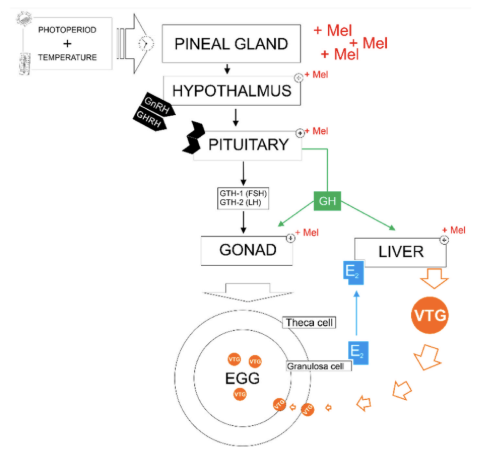


Aquaculture producers need practical, low‑cost levers to improve spawning success without increasing environmental pressure. This research tests two such levers—photoperiod (day–night cycles) and water temperature—on hormone profiles that control the reproductive cycle of female African catfish (Clarias gariepinus). The team measured melatonin, growth hormone, estradiol, and vitellogenin under controlled regimes, then linked hormonal responses to spawning performance.
The experiments reveal that optimized combinations of photoperiod and temperature synchronize endocrine signals, accelerating maturation and egg quality while avoiding stress responses. Extended‑dark or extended‑light cycles produce distinct melatonin patterns that cascade through growth and reproductive hormones. Within safe temperature windows, these cues translate into higher spawning efficiency and hatch rates. Because lighting and temperature are relatively inexpensive to adjust in hatchery settings, the findings are immediately actionable for small‑ and medium‑scale producers.
Beyond production gains, the study points to sustainability gains: better reproductive synchronization reduces broodstock waste, lowers energy and feed use per unit output, and supports responsible seed supply chains. The authors propose simple calendars and monitoring protocols that hatcheries can adopt to match seasonal demand and avoid over‑intensification.
By turning endocrine science into practical hatchery guidance, the work contributes to SDG 2 (food security via efficient aquaculture), supports SDG 14 (sustainable use of aquatic resources), and aligns with SDG 12 (responsible production through resource‑efficient practices).
Read full paper here: https://doi.org/10.1016/j.repbre.2025.01.002
Credits
Universitas Padjadjaran authors: Epro Barades; Iskandar; Ibnu Dwi Buwono; Yuli Andriani
Affiliations: Agricultural Science Study Program, Faculty of Agriculture, Universitas Padjadjaran, Sumedang, Indonesia; Department of Fisheries, Faculty of Fisheries and Marine Sciences, Universitas Padjadjaran, Sumedang, Indonesia; Fish Hatchery Technology Study Program, Politeknik Negeri Lampung, Bandar Lampung, Indonesia
Hashtags: #UnpadResearch #SDG2 #Aquaculture #Catfish #Photoperiod #Hatchery