
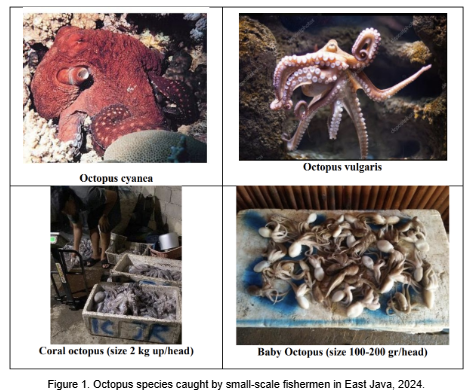














A recent study published in BIO Web of Conferences (2025) explores the socio-economic dynamics of small-scale octopus fisheries in East Java, Indonesia. Conducted in Sumenep, Banyuwangi, and Malang, the research highlights how octopus fishing serves as a crucial livelihood for coastal communities, while also facing significant challenges such as climate change, fluctuating market prices, high operational costs, and limited governance. Findings reveal that fishing trips range from 3 to 30 per month with yields of 4 to 80 octopuses per trip, generating varied profits depending on season and location.
The study emphasizes that while octopus is a vital economic resource, the patron-client system in supply chains, resource depletion, and lack of specific management policies threaten long-term sustainability. Researchers recommend improved governance, better access to markets, and stronger support systems to ensure sustainable fisheries that balance community welfare and marine resource conservation. This aligns with the UN Sustainable Development Goals (SDG 1 – No Poverty, SDG 2 – Zero Hunger, SDG 8 – Decent Work and Economic Growth, SDG 14 – Life Below Water).
Full article: Socio-Economic dynamics of octopus fisheries for the livelihood sustainability of small-scale fishers in East Java, Indonesia
Meet the Researchers:
his study was conducted by Terry Indrabudi, Riesti Triyanti, Widya Safitri, and Mochamad Candra Wirawan Arief from the National Research and Innovation Agency (BRIN) and Universitas PadjadjaranHashtags:
#OctopusFisheries #SmallScaleFisheries #CoastalCommunities #SustainableFisheries #UnpadResearch #SDG1 #SDG2 #SDG8 #SDG14