
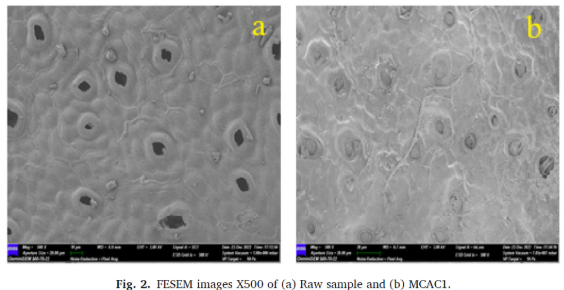


A research team from Universiti Sultan Zainal Abidin (UniSZA), in collaboration with international partners, has successfully developed activated carbon from Melaleuca cajuputi leaves to remove harmful BTEX compounds (benzene, toluene, ethylbenzene, and xylene) from water. These volatile organic compounds are classified as priority pollutants due to their serious impacts on human health and ecosystems. By converting locally abundant plant waste into an eco-friendly adsorbent, the study demonstrates a sustainable and cost-effective solution for water purification.
The study was led by UniSZA researchers with Dr. Azimah Ismail as the corresponding author, supported by colleagues from ESERI, FRIT, and FBIM. The project also featured strong international collaboration, including Dr. Yudi Nurul Ihsan from Universitas Padjadjaran, Indonesia, whose expertise enriched the research. This global partnership highlights UniSZA’s commitment to advancing impactful science through knowledge sharing and cooperation. Together, the team showed that activated carbon from M. cajuputi leaves achieved up to 94% removal efficiency of BTEX contaminants within just 30 minutes, proving its potential for real-world applications.
This research supports the United Nations’ Sustainable Development Goals (SDGs), particularly SDG 6 (Clean Water and Sanitation), SDG 12 (Responsible Consumption and Production), and SDG 13 (Climate Action). By turning plant waste into a valuable resource for environmental remediation, the project demonstrates how local knowledge and international collaboration can contribute to cleaner water, healthier communities, and a greener future. For more details, readers can access the full article here: https://doi.org/10.1016/j.kjs.2024.100247
#Sustainability #CleanWater #GreenInnovation #SDG6 #SDG12 #SDG13 #ActivatedCarbon #EnvironmentalScience