



This study investigates the alarming presence of microplastics in the coastal ecosystem of Pangandaran, Indonesia, focusing on their accumulation in commercially important fish species—mackerel tuna and lemuru—as well as in seawater samples.
Researchers collected fish samples landed by coastal trawlers and seawater along fishing routes on the East Coast of Pangandaran. Using laboratory methods including hydrogen peroxide digestion, NaCl flotation, microscopic identification, and FTIR (Fourier-transform infrared spectroscopy), they analyzed the forms, abundance, and polymer types of microplastics.
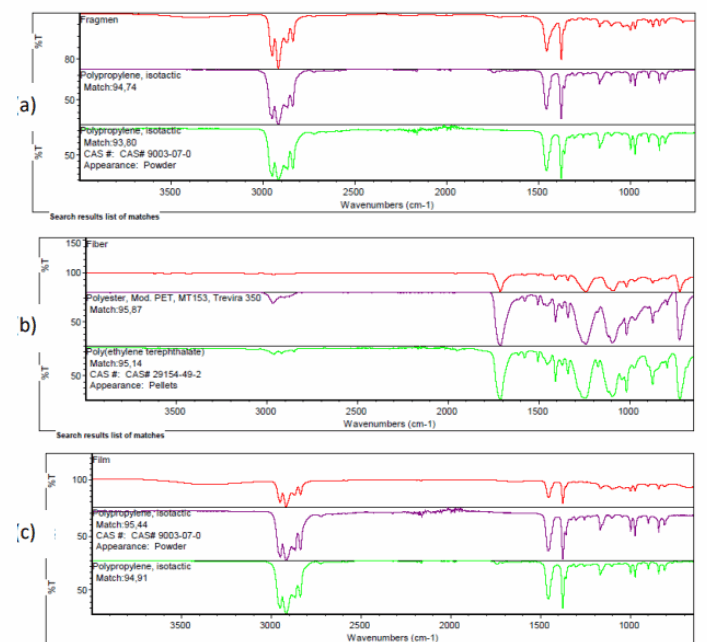
Findings revealed that four types of microplastics—fragments, fibers, films, and pellets—were present across all samples. In mackerel tuna, fragments dominated with an average abundance of 4.61 ± 2.61 particles per gram. In lemuru, fibers were most common, reaching 2.45 ± 2.39 particles per gram. Water samples contained up to 1.33 particles per cubic meter, also dominated by fragments. FTIR analysis identified polypropylene (PP) in fragments and films, and polyester (PES) in fibers, indicating that common consumer plastics such as bags, packaging, and textiles are major contributors.
The implications are serious: ingested microplastics can cause intestinal blockage, reduced feeding efficiency, and physiological stress in fish. Since mackerel tuna and lemuru are widely consumed by local communities, there is also potential for human exposure through seafood consumption. Beyond health risks, microplastic contamination threatens biodiversity and undermines fisheries-dependent livelihoods.
The study concludes that mackerel tuna and lemuru could serve as bioindicators of microplastic pollution in Indonesia’s coastal waters. It highlights the urgency of reducing plastic waste at the source, improving coastal waste management, and raising community awareness. By aligning with global sustainability goals, the research emphasizes the dual need to protect marine ecosystems (SDG 14), minimize waste generation (SDG 12), and safeguard human health (SDG 3).
Credits
Meet the Researchers: This study was led by Mochamad Rudyansyah Ismail and colleagues from Universitas Padjadjaran’s Marine Affairs, Fisheries, and related departments, with collaboration in the International Seminar of Indonesian Seas (ISCO) 2024.
Hashtags
#Microplastics #MarinePollution #Pangandaran #SDG14 #OceanHealth #PlasticWaste #FisheriesResearch