
Plastic pollution has become one of the world’s most urgent environmental problems, with marine ecosystems facing severe impacts from waste accumulation. This study focused on exploring bacteria that live in association with ascidians—marine invertebrates commonly found on coral reefs and marine debris—in the Karimunjawa Islands, Indonesia. The research aimed to identify bacteria capable of producing enzymes, such as PETase, that can degrade plastics.
Samples from nine ascidian species, including Eusynstyela sp., Didemnum sp., and Phallusia sp., were collected from depths of 5–20 meters. Using a combination of microbiological and molecular techniques, researchers successfully isolated 45 bacterial strains. These strains were tested for their ability to break down plastic, specifically low-density polyethylene (LDPE).
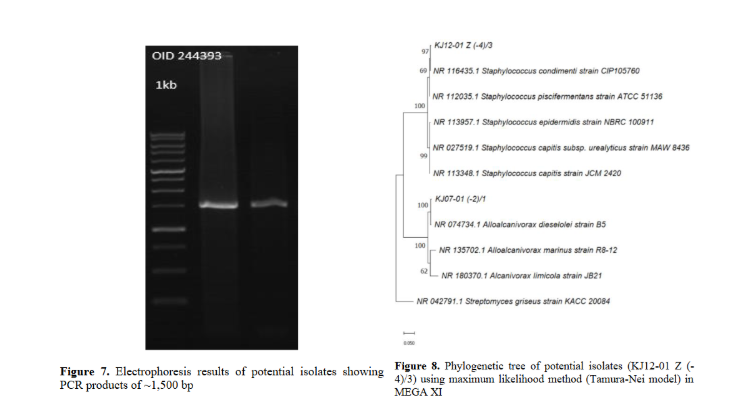
The findings revealed that about 33% of the isolates showed enzymatic activity, and two isolates demonstrated significant plastic-degrading potential. Molecular analysis through 16S rRNA gene sequencing identified these as Staphylococcus condimenti (a Gram-positive bacterium often found in fermentation processes) and Alcanivorax dieselolei (a Gram-negative bacterium known for breaking down hydrocarbons and commonly associated with oil spill bioremediation).
Scanning Electron Microscope (SEM) analysis confirmed that these bacteria were capable of colonizing plastic surfaces, forming biofilms, and causing structural degradation of the plastic material. Although the degradation rates were modest compared to some insect-associated microorganisms, the study emphasized that optimizing environmental conditions (temperature, pH, nutrient composition) could enhance bacterial performance.
This research is groundbreaking because it demonstrates that ascidian-associated bacteria in tropical marine environments may serve as natural resources for biotechnological solutions to plastic pollution. Unlike genetic engineering approaches that are costly and often laboratory-bound, these marine bacteria could provide eco-friendly alternatives to reducing persistent plastic waste in the ocean.
Credits
Meet the Researchers: This collaborative study was led by Diah Ayuningrum (Universitas Diponegoro), with contributions from Moh Yunus Shukor (Universiti Putra Malaysia), Mufti Petala Patria (Universitas Indonesia), Buntora Pasaribu (Universitas Padjadjaran), and Sulistiowati (Universitas Gadjah Mada). The project was supported by Riset Kolaborasi Indonesia 2024
Hashtags
#MarineBiotech #PlasticPollution #SDG14 #BluePlanetSolutions #OceanScience #Biodegradation