


Original Title:
Dataset on the Diversity of Epipelic Diatoms in Sediment Layers as Bioindicators of Aquatic Environment
Narrative Explanation
This study investigates how tiny microalgae called epipelic diatoms, which live in sediment layers, can serve as natural indicators of aquatic ecosystem health. Conducted in Dumai City, Riau Province—a region heavily impacted by industrial activity along the Strait of Malacca—the research highlights how these microorganisms respond to pollution and environmental changes.
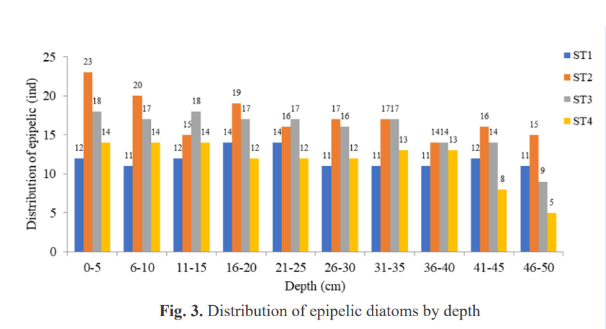
Researchers sampled sediments from four sites: the Dumai River Estuary, Masjid River Estuary, Bangsal Aceh Industrial Area, and Koneng Beach. Sediment cores were taken down to 50 cm and analyzed for diatom species diversity, abundance, and ecological indices (diversity, dominance, and uniformity). A total of 25 diatom species were identified, with the highest abundance recorded in surface sediments (0–5 cm), particularly at the Masjid River Estuary. This location also showed elevated levels of nitrate and phosphate, confirming the link between nutrient enrichment and diatom growth.
Ecological indices revealed a moderate balance in species diversity (2.06–2.98), low dominance (<0.5), and high evenness (>0.5). This means that while pollution is present, the aquatic environment still maintains ecological stability without one species outcompeting others. Water quality parameters such as pH, salinity, and temperature remained within tolerable ranges for diatom survival.
The analysis demonstrates that epipelic diatoms are highly sensitive to changes in nutrient input, depth, and sediment conditions. Their abundance and diversity provide reliable insight into the degree of anthropogenic stress, particularly from industrial effluents, urbanization, and port activities in Dumai. By capturing long-term ecological signals stored in sediments, epipelic diatoms can serve as early warning systems for aquatic degradation, making them a valuable tool for sustainable water management.
This research underscores the importance of integrating biological indicators with conventional water quality assessments. In industrially active coastal regions like Dumai, such tools are crucial for balancing economic growth with ecosystem sustainability.
Credits
Meet the Researchers: The study was led by Sofyan Husein Siregar (Universitas Riau), with contributions from Efriyeldi, Zulkifli, Ronal Kurniawan, Ersa Fitriani, Agung Dhamar Syakti, Rihad Hakam, and Buntora Pasaribu, representing collaborative expertise from Universitas Riau, Raja Ali Haji Maritime University, and Universitas Padjadjaran.
Hashtags
#DiatomResearch #WaterQuality #SDG14 #Bioindicators #MarineScience #SustainableWaters