
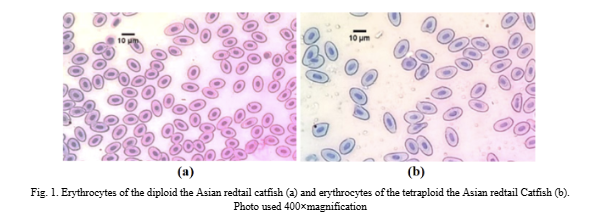


A recent study published in Trends in Sciences (2025) investigated how cold shock treatments affect larval viability and chromosome manipulation in the Asian redtail catfish (Hemibagrus nemurus). By applying temperature shocks at different times after fertilization, researchers found that a 3-minute cold shock at 6 °C, given 28 minutes after fertilization, produced the highest tetraploid percentage (78.33%) while maintaining viable survival rates.
Tetraploid catfish are particularly valuable in aquaculture because they can be used to produce triploid offspring, which grow faster, are more disease-resistant, and have better meat quality. This breakthrough provides a promising method for improving catfish farming efficiency in Indonesia and beyond, contributing to sustainable aquaculture practices and food security.
This research aligns with the United Nations Sustainable Development Goals (SDG 2 – Zero Hunger, SDG 12 – Responsible Consumption and Production, SDG 14 – Life Below Water, and SDG 15 – Life on Land).
Meet the Researchers
This study was conducted by Dwi Puji Hartono (Universitas Padjadjaran & Politeknik Negeri Lampung), Alimuddin Alimuddin (IPB University), Ibnu Dwi Buwono, and Yudi Nurul Ihsan (Universitas Padjadjaran).
Hashtags
#AquacultureInnovation #CatfishResearch #ColdShock #FishGenetics #UnpadResearch #SDG2 #SDG12 #SDG14 #SDG15