



This study explores the global landscape of research on biosurfactants—naturally derived surface-active compounds from microbes—focusing on their potential as antimicrobial agents. With the growing crisis of antimicrobial resistance, scientists are increasingly turning to biosurfactants for their biodegradable, non-toxic, and environmentally friendly properties.
Using bibliometric analysis of 908 publications indexed in Scopus between 1991 and 2023, the research maps trends, leading contributors, institutions, journals, and collaboration networks. The findings reveal a steady increase in research since the early 2000s, peaking in 2022. India emerged as the most prolific contributor, while Ulster University led institutional productivity. Influential articles include works on lipopeptides and rhamnolipids, which have shown promise against antibiotic-resistant pathogens like Staphylococcus aureus and Escherichia coli.
Keyword mapping highlighted major themes such as antibiofilm activity, antibiotic resistance, and synergy with drug delivery technologies, suggesting that biosurfactants could revolutionize how we address multidrug-resistant infections. Moreover, the integration of nanotechnology with biosurfactants offers promising therapeutic approaches.
By showcasing research hotspots, collaborations, and future perspectives, this paper not only underscores the vital role of biosurfactants in global health innovation but also points to their broader industrial and pharmaceutical applications. These insights contribute to SDG 3 by supporting novel strategies for combating antimicrobial resistance, while also aligning with SDG 9 and SDG 12 through their relevance in sustainable biotechnology and responsible production.
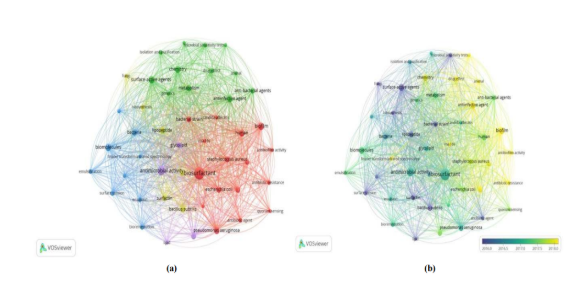
Mapping of occurrence terms retrieved from titles and abstracts in biosurfactant as antimicrobial-related research articles conducted by VOSviewer. Visualizations in (a) network and (b) overlay. The circles’ sizes correspond to the frequency of appearances. The degree of relationship is indicated by the length of the link. The different colors reveal distinct clusters. The color gradient, from purple to yellow, indicates the timeline from older to more recent publications
Credits:
This study was authored by Achmad Rifky Alfian, Novita Yustinadiar, Abdul Rahman Siregar, Furzani Pa’ee, Ekachai Taowkrue, Neng Tanty Sofyana, Wahyu Aristyaning Putri (corresponding author, Universitas Gadjah Mada)
.
Hashtags:
#Biosurfactants #AntimicrobialResistance #SDG3 #GlobalHealth #SustainableBiotech #MicrobialInnovation