
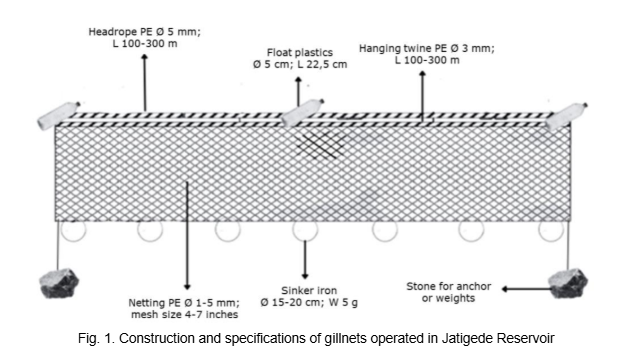



A new study published in the Egyptian Journal of Aquatic Biology & Fisheries (2025) provides a comprehensive overview of inland water capture fisheries in Jatigede Reservoir, West Java, Indonesia. The research found that most fishers are full-time locals using traditional gillnets, with catches dominated by tilapia, freshwater crayfish, and paray fish. Fishing operations are primarily centered in the Cimanuk River Basin, with activities shaped by seasonal variations that affect catch quantity and species diversity.
The findings underline the importance of managing inland water fisheries for both economic welfare and ecosystem health. Sustainable practices are crucial to preserve biodiversity while ensuring food security and income for surrounding communities. This study supports the United Nations Sustainable Development Goals (SDG 1 – No Poverty, SDG 2 – Zero Hunger, SDG 12 – Responsible Consumption and Production, SDG 14 – Life Below Water, SDG 15 – Life on Land).
Full article: Inland Waters Captured Fisheries in Indonesia: A Case Study of Small-Scale Fishery in Jatigede Reservoir
Meet the Researchers:
This study was conducted by Izza Mahdiana Apriliani, Lantun Paradhita Dewanti, Heti Herawati, Mochamad C. W. Arief, Zahidah, and Rachmad Cesario from Universitas Padjadjaran, Utsunomiya University (Japan), and the University of LampungHashtags:
#InlandFisheries #SmallScaleFisheries #SustainableFisheries #JatigedeReservoir #UnpadResearch #SDG1 #SDG2 #SDG12 #SDG14 #SDG15