
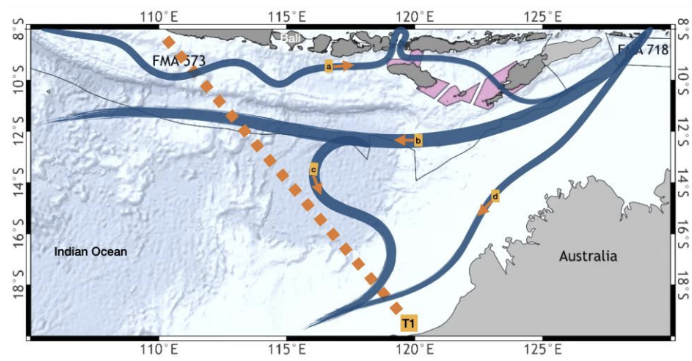


A collaborative research led by Universitas Padjadjaran and University Malaysia Terengganu has explored chlorophyll-a and nutrient dynamics in the Eastern Tropical Indian Ocean (ETIO) during the 2022–2023 La Niña event. The study revealed strong vertical stratification of nitrate, phosphate, and silicate, with a well-defined nutricline around 100 meters depth. Seasonal monsoon-driven upwelling along Java’s southern coast was identified as a productivity hotspot, supporting phytoplankton growth crucial for fisheries and marine biodiversity.
Findings highlight that ENSO-driven variability plays a key role in regulating nutrient supply and ocean productivity in the ETIO. During La Niña phases, surface nutrient depletion limited productivity, while transitions toward El Niño showed enhanced chlorophyll-a concentrations. These insights are vital for predicting climate impacts on fisheries, food security, and marine ecosystem resilience in one of the world’s most dynamic ocean regions.
The research supports the UN Sustainable Development Goals (SDGs) 13: Climate Action, 14: Life Below Water, and 2: Zero Hunger, by linking ocean-climate interactions with food security and sustainable marine resource management. The outcomes provide valuable guidance for policymakers and stakeholders in addressing climate variability impacts on the Indian Ocean.
Full article: Stratified Ocean Chlorophyll-a and Nutrient Availability in the Eastern Tropical Indian Ocean during La Niña 2022–2023
Meet the Researchers:
This study was conducted by Noir P. Purba, Mohd Fadzil Akhir, Ghelby M. Faid, Nur H. Roseli, Ignatia F. Sinaga, and Ibnu Faizal, from Universitas Padjadjaran and University Malaysia Terengganu.
Hashtags:
#OceanProductivity #ClimateAction #SDG13 #SDG14 #SDG2 #UnpadResearch #IndianOcean