
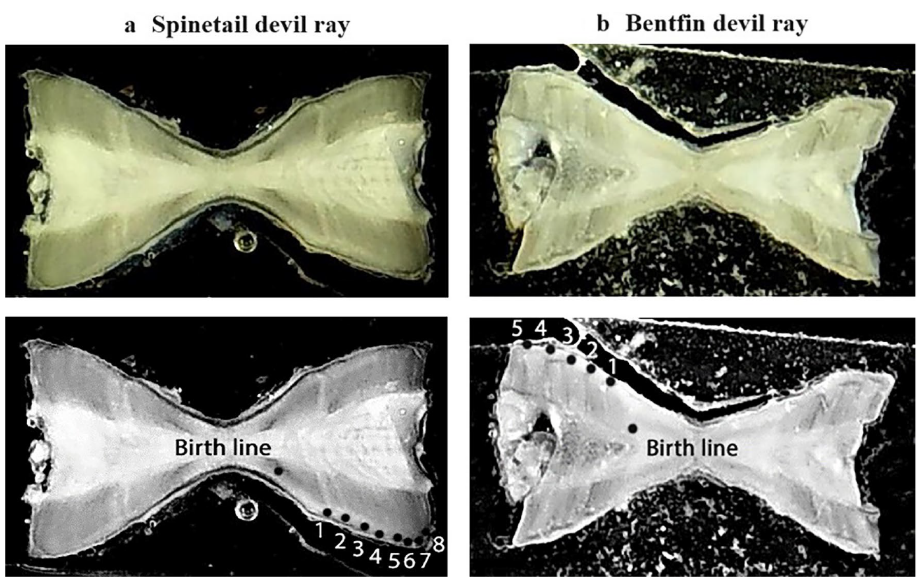

A new study published in Marine Biology highlights the urgent conservation needs of two endangered species of devil rays — the Spinetail Devil Ray (Mobula mobular) and the Bentfin Devil Ray (M. thurstoni) — in the Indian Ocean. Researchers found that these rays have extremely low reproductive rates and are highly vulnerable to overfishing. Current fishing mortality rates were found to be higher than the species’ natural capacity to recover, indicating that fisheries catches are unsustainable.
The study was an international collaboration involving Newcastle University, King Abdullah University of Science and Technology, Fisheries and Oceans Canada, WWF Pakistan, and Kenya Marine and Fisheries Research Institute. From Universitas Padjadjaran, the research was proudly represented by Alexander M. A. Khan, Mochamad Rudyansyah Ismail, and Lantun Paradhita Dewanti. Their contribution included vital field data collection in Indonesia and analysis that led to the first published age and growth data for M. thurstoni.
This research supports the United Nations Sustainable Development Goals, especially SDG 14: Life Below Water (targets 14.2 & 14.4), which emphasize sustainable fisheries management and marine biodiversity conservation.
Read the full paper here: https://doi.org/10.1007/s00227-024-04564-6
Meet the Researchers: Stay tuned for our upcoming Meet the Researchers feature, where we will share stories and insights from Alexander, Mochamad, and Lantun on their work in conserving Indonesia’s marine biodiversity.
Hashtags
#MarineConservation #SustainableFisheries #DevilRays #SDG14 #LifeBelowWater #UniversitasPadjadjaran