
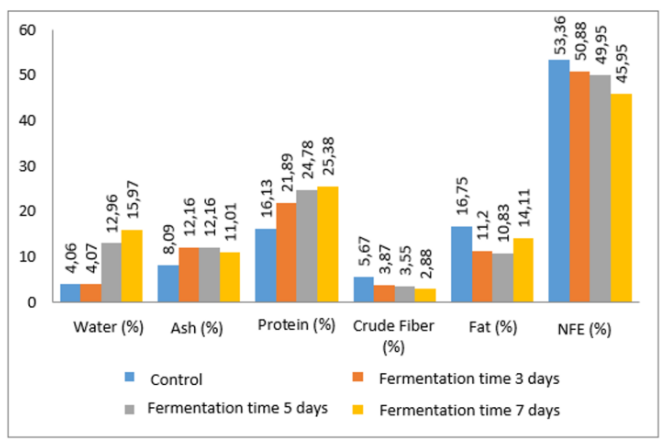


Aquaculture faces two pressing challenges: the high cost of feed and the environmental burden of waste. This study by researchers from Universitas Padjadjaran investigates how fermented restaurant waste flour (FRWF) can be used as a low-cost, eco-friendly feed ingredient to improve the growth of pangasius catfish fry (Pangasius pangasius).
Restaurant waste typically contains useful nutrients—protein, fat, phosphorus, calcium, and crude fiber—but requires processing to enhance digestibility and safety. The team fermented the waste for different durations, then formulated feeds with varying inclusion rates of FRWF (0%, 10%, 20%, 30%, and 40%). Growth performance, survival rate, and water quality were closely monitored under controlled conditions.
Findings revealed that a seven-day fermentation period was optimal, producing a feed with 25.38% protein, 15.97% moisture, and 4302 Kcal/kg energy. Among the treatments, fish fed diets with 40% FRWF showed the best daily growth rate (1.93%/day), while maintaining high survival rates (80–95%). Importantly, water quality indicators—temperature (25.8°C), dissolved oxygen (4.80 mg/L), pH (7.15), and ammonia (0.03 mg/L)—remained within healthy ranges, showing that waste-based feed did not harm the aquatic environment.
The study highlights a promising pathway to reduce feed costs, support circular economy practices, and make aquaculture more sustainable. By converting restaurant waste into high-quality fish feed, the research contributes to food security (SDG 2), minimizes waste and promotes responsible consumption (SDG 12), and enhances sustainable fisheries production (SDG 14).
Credits
Meet the Researchers: This study was led by Yuli Andriani with co-authors Iskandar, Rusky I. Pratama, Muhamad Dwi Cahya, and Mochamad Galuh N. Prima, from the Faculty of Fisheries and Marine Science, Universitas Padjadjaran.
Hashtags
#UnpadResearch #AquacultureInnovation #CircularEconomy #SustainableFisheries #SDG14 #FoodSecurity #FishFeed