
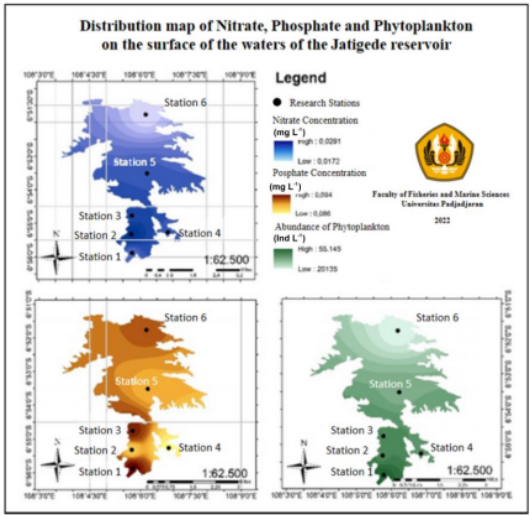


A recent study on the Jatigede Reservoir has provided crucial insights into the relationship between nutrient dynamics and aquatic productivity, highlighting its implications for sustainable capture fisheries and community livelihoods. The research focused on assessing nitrate and phosphate concentrations, as well as their correlation with phytoplankton abundance, which serves as a primary food source for fish.
Findings revealed that nitrate concentrations ranged from 0.013 to 0.044 mg L⁻¹, while phosphate concentrations varied between 0.054 and 0.122 mg L⁻¹. These nutrient levels showed a strong positive correlation (r = 0.787) with phytoplankton abundance, which reached up to 59,817 individuals per liter. This indicates that the productivity of the reservoir is highly dependent on nutrient availability, with 62% of phytoplankton growth explained by nitrate and phosphate levels.
This research is strongly aligned with the Sustainable Development Goals (SDGs). In relation to SDG 2 (Zero Hunger), the study underscores the importance of maintaining reservoir productivity to sustain capture fisheries as a vital protein source and livelihood for local communities. With respect to SDG 13 (Climate Action), proactive water quality monitoring is essential to mitigate eutrophication risks caused by nutrient overload, which are often exacerbated by climate change. Furthermore, the research contributes to SDG 14 (Life Below Water) by emphasizing ecosystem-based management approaches to protect aquatic biodiversity and ensure long-term sustainability of freshwater fisheries.
The study ultimately provides a scientific foundation for policymakers, resource managers, and local communities to establish effective conservation zones, select appropriate fishing grounds, and enhance food security through sustainable aquatic resource management.
Inventor: Dr. Heti Herawati, Prof. Zahidah, Dr. Iskandar, Dr. Sunarto, Dr. Mochamad C. W. Arief
#SustainableFisheries #WaterQualityMonitoring #AquaticEcosystems #ZeroHunger #ClimateAction #LifeBelowWater #JatigedeReservoir #BlueEconomy #SustainableDevelopment