
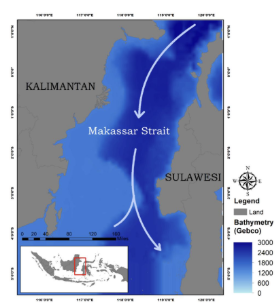


A new study led by researchers from Universitas Padjadjaran, in collaboration with Universitas Hasanuddin and Andalas University, has successfully modeled the potential habitat of skipjack tuna (Katsuwonus pelamis) in the Makassar Strait using satellite-derived oceanographic data and the MaxEnt model. By integrating parameters such as sea surface temperature, salinity, chlorophyll-a, sea surface height, wind, and currents from 2015–2020, the team identified the environmental ranges most favorable for skipjack presence. The results highlight that sea surface height (SSH) is the most influential factor, contributing nearly 50% to habitat suitability.
This breakthrough is vital for Indonesia’s tuna fisheries, as skipjack represents more than half of the global tuna catch. The research provides scientifically robust insights to support sustainable fisheries management, enabling better prediction of fishing grounds and reducing wasted efforts. With climate variability increasingly affecting marine resources, such habitat modeling strengthens resilience in fisheries and coastal communities.
The publication directly supports the United Nations Sustainable Development Goals (SDGs), particularly SDG 14 (Life Below Water), SDG 13 (Climate Action), and SDG 2 (Zero Hunger) by promoting sustainable use of ocean resources while safeguarding food security.
Read the full article here: Satellite-derived prediction on habitat modelling of skipjack tuna in the Makassar Strait
Meet the Researchers:
This research was conducted by Mega L. Syamsuddin, Subiyanto, Tonny Bratasena, Fadli Syamsudin, Noir P. Purba, Yudi Nurul Ihsan, Ajeng R. Puspita, Mukti Zainuddin, and Nofrita—a multidisciplinary team of marine scientists from Universitas Padjadjaran, BRIN, Universitas Hasanuddin, and Universitas Andalas, bringing expertise in marine science, fisheries, biology, and conservation.
Hashtags
#SustainableFisheries #MarineScience #SkipjackTuna #MakassarStrait #OceanResearch #SDG14 #ClimateAction #FoodSecurity