
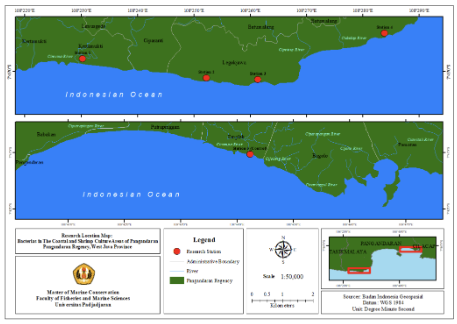



A recent study led by Universitas Padjadjaran has investigated the contamination of pathogenic bacteria in vannamei shrimp (Litopenaeus vannamei) farming areas along the Pangandaran coast, West Java. Researchers analyzed pond water, seawater, and sediment samples from five stations and found that sediment contained the highest bacterial loads (2.854×10⁷ CFU/g), including harmful species such as Vibrio fluvialis and Vibrio alginolyticus, both known to cause shrimp diseases like vibriosis.
The study also identified beneficial bacteria such as Bacillus flexus and Bacillus albus, commonly used as probiotics by local farmers to control pathogenic populations. Despite the detection of pathogenic Vibrio strains, the use of probiotics was found to support shrimp health and reduce disease risks, showing the potential of microbial management strategies to strengthen sustainable aquaculture practices.
This research emphasizes the urgent need for improved pond management and microbial monitoring to secure shrimp production and coastal ecosystem health. It aligns with the UN Sustainable Development Goals (SDGs) 2: Zero Hunger, 3: Good Health and Well-being, 14: Life Below Water, and 15: Life on Land, by promoting food security, sustainable aquaculture, and ecosystem protection.
Meet the Researchers:
This study was conducted by Titin Herawati, Indriyani Rahayu, Aisyah Aisyah, Mochamad U.K. Agung, Buntora Pasaribu, Atikah Nurhayati, Adiana B. Ghazali, Roffi Grandiosa, Thallita N. Faddilah, and Rendika Kamiswara from Universitas Padjadjaran and Universiti Malaysia Terengganu.
Hashtags:
#ShrimpFarming #AquacultureHealth #PathogenicBacteria #SDG2 #SDG3 #SDG14 #SDG15 #UnpadResearch #Pangandaran