
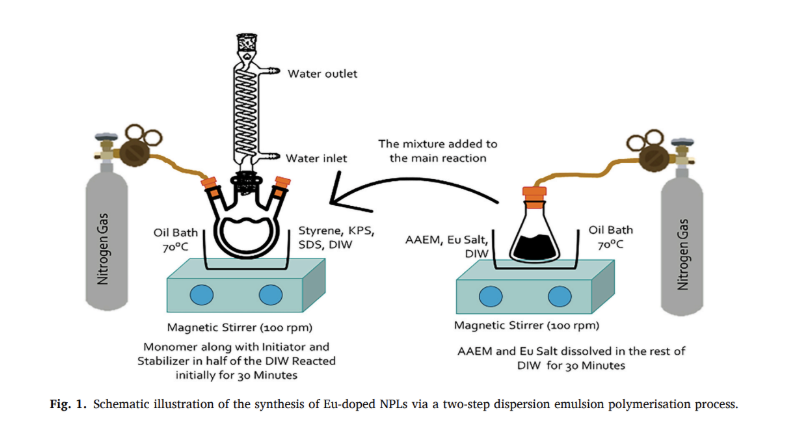


A new study published in Environmental Nanotechnology, Monitoring & Management (2025) introduces europium-labelled nanopolystyrene as an innovative model to track nanoplastics in environmental toxicology research. Unlike conventional polystyrene beads, these europium-tagged nanoplastics allow scientists to visualize and quantify plastic particle uptake in aquatic organisms with higher sensitivity and precision. This advancement addresses one of the biggest challenges in nanoplastic research: the difficulty of detection at environmentally relevant concentrations.
By providing a reliable tracking method, the study paves the way for deeper understanding of how nanoplastics accumulate in food chains, impact aquatic ecosystems, and potentially affect human health. The authors emphasize that improved monitoring tools are essential for designing strategies to mitigate nanoplastic pollution and to guide evidence-based policy for plastic waste reduction.
This research contributes to the achievement of United Nations Sustainable Development Goals (SDG 3 – Good Health and Well-being, SDG 6 – Clean Water and Sanitation, SDG 12 – Responsible Consumption and Production, and SDG 14 – Life Below Water).
Full article: https://www.scopus.com/pages/publications/105008656674
Meet the Researchers
This study was conducted by Rega Permana (Faculty of Fisheries and Marine Science, Universitas Padjadjaran & University of Birmingham), Swati Sharma, Christopher Stark, Christian Pfrang, and Eugenia Valsami-Jones (University of Birmingham), along with David Price (PerkinElmer, UK).
Hashtags
#Nanoplastics #EnvironmentalToxicology #MarinePollution #PlasticResearch #UnpadResearch #SDG3 #SDG6 #SDG12 #SDG14