


This study explores the fragile link between coral reef cover and reef fish abundance in the Karimun District, Riau Archipelago, Indonesia. Coral reefs in this area, vital as habitats and spawning grounds, are under severe threat from sand mining, which increases turbidity and introduces harmful elements like magnesium and potassium. Using Point Intercept Transect (PIT) and Underwater Visual Census (UVC) methods, researchers assessed 10 reef sites in 2023.
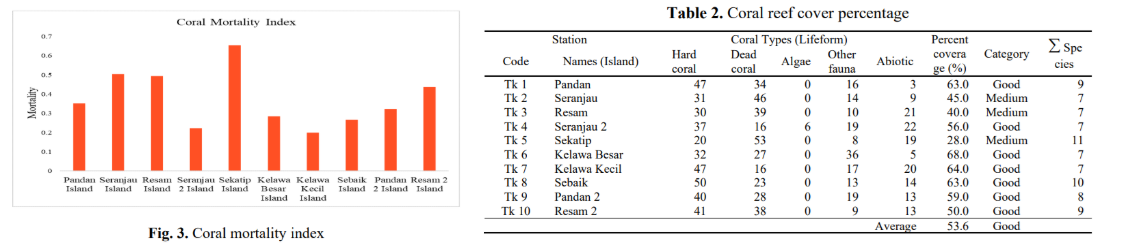
Findings revealed that the average coral cover was 53.6%, categorized as “good,” though some areas showed moderate damage with high coral mortality due to mining activities. In total, 807 reef fish individuals were recorded across 14 species and 4 families, with diversity indices ranging from low to moderate (0.917–1.502). The statistical analysis showed a weak positive correlation between coral cover and reef fish abundance (r = 0.192) and a weak negative correlation between coral cover and species diversity (r = -0.021)
69
.
These results suggest that while coral reefs remain a critical habitat, reef fish abundance and diversity are influenced by additional factors such as habitat complexity, substrate types, and human activities. Protecting coral reef ecosystems in Karimun requires integrated management to mitigate mining impacts and sustain biodiversity. This research enriches ecological data on Indonesia’s Coral Triangle and supports sustainable marine conservation policies aligned with global goals.
Credits:
Meet the Researchers: The study was conducted by David Del Vito and colleagues from Universitas Padjadjaran and Raja Ali Haji Maritime University, with collaboration from local communities and institutional partners.
Hashtags:
#UnpadResearch #SDG14 #MarineConservation #CoralReefs #KarimunIslands #ReefFish